
A single incorrect character in a vehicle identification number can make finding a car’s history surprisingly difficult. It may prevent a search from returning auction records, registration details or useful information about previous damage.
The search term 5xxg64j22mgo79437 appears to contain a typing error. Replacing the letter O with the number zero produces the VIN 5XXG64J22MG079437, which appears in archived auction listings for a 2021 Kia K5.
These records provide useful information about the vehicle’s earlier condition. However, they also contain conflicting details that deserve further investigation. Anyone researching this particular Kia should know which information can be checked online and which requires additional documents or a physical inspection.
The Difference Between the Searched Code and the Actual VIN
Modern vehicles sold in the United States have a 17-character vehicle identification number, commonly called a VIN. Manufacturers use this identifier to distinguish individual vehicles and record certain production details.
Under US vehicle identification regulations, the letters I, O and Q are excluded to prevent confusion with numbers. This explains why the original search term does not follow the accepted VIN format.
|
Detail |
Information |
|---|---|
| Original search term |
5xxg64j22mgo79437 |
|
Likely corrected VIN |
5XXG64J22MG079437 |
| Incorrect character |
Letter O |
|
Replacement character |
Number 0 |
| Vehicle manufacturer |
Kia |
|
Vehicle model |
K5 |
| Model year |
2021 |
The corrected identifier appears in multiple auction archives. Nevertheless, anyone purchasing the vehicle should compare it directly with the VIN displayed on the car and its ownership documents.
What Historical Records Reveal About This Kia K5
Two publicly accessible auction archives associate the corrected VIN with a 2021 Kia K5 previously listed in Indianapolis, Indiana. The available records contain the following vehicle specifications:
| Vehicle characteristic | Archived information |
|---|---|
|
Manufacturer |
Kia |
|
Model |
K5 |
| Model year |
2021 |
|
Engine displacement |
1.6 litres |
| Fuel type |
Gasoline |
|
Transmission |
Automatic |
| Drivetrain |
Front-wheel drive |
|
Auction location |
Indianapolis, Indiana |
| Auction lot number |
47709641 |
These details describe the vehicle as recorded in earlier listings. They do not establish its current location, mileage, ownership or mechanical condition. This distinction becomes particularly important when researching vehicles that have passed through salvage auctions or international dealerships.
Why the Auction Records Show Different Damage Details
An interesting part of this vehicle’s history is the difference between available auction descriptions. PLC Auction records front and side damage, while America Motors lists minor dents and scratches. The archives also contain different descriptions of whether the vehicle could start.
America Motors additionally lists a salvage certificate among the vehicle’s historical documents. These differences should not be ignored. Auction information may come from separate inspection stages, data transfers or older versions of a listing.
Rather than accepting the most favorable description, buyers should request original auction photographs, inspection documents and any available repair invoices. A short damage description rarely tells the complete story. A damaged bumper may conceal problems with mounting points, sensors or other components behind it.
Reading the Information Hidden Inside a VIN
A VIN follows an organized format. Different character positions provide information about the vehicle and its production. The opening characters identify the manufacturer. Other positions describe vehicle attributes, while the ninth character serves as a mathematical verification digit under US regulations. The tenth position identifies the model year within the applicable coding cycle. In the corrected Kia VIN, the letter M corresponds to the 2021 model year.
The remaining positions help identify the manufacturing facility and individual production details. A VIN decoder is useful for checking factory-related information. However, it cannot tell you whether an engine has been replaced, whether the vehicle has suffered recent damage or whether previous repairs were completed correctly. Those questions require a different type of investigation.
Where to Find the Correct VIN on a Vehicle
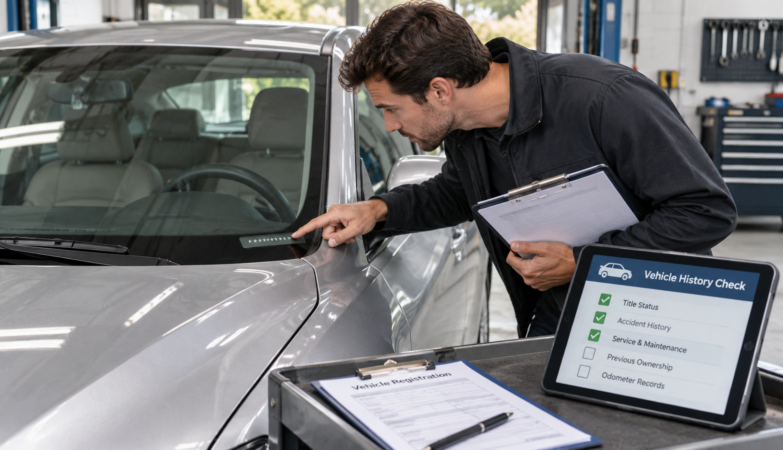
Before purchasing a history report, confirm that the identifier belongs to the actual car. Look for the VIN near the lower driver’s side of the windshield. Another identification label is commonly located around the driver’s door opening. Compare these details with the vehicle title and registration paperwork. Photographs supplied by an online seller should be clear enough to read every character.
If one document contains a different number, ask the seller to explain the discrepancy before proceeding. A simple typing mistake may be responsible, but unresolved differences can indicate a more serious identification or paperwork problem. The physical vehicle should remain the starting point for any reliable VIN investigation.
Choosing the Right Vehicle History Search
Several types of online checks are available, and each serves a different purpose.
Official VIN Decoder
The National Highway Traffic Safety Administration (NHTSA) provides a public VIN decoding service. It helps users identify vehicle specifications from manufacturer-reported information. The service is available through the official NHTSA VIN decoder.
Vehicle Title History
The National Motor Vehicle Title Information System, known as NMVTIS, helps consumers investigate title records, odometer information and reported salvage or total-loss history. Consumers can obtain reports through approved data providers listed on the US Department of Justice’s vehicle history website.
Safety Recall Information
NHTSA also operates a recall lookup service. Entering a verified VIN can help determine whether a vehicle has an unrepaired safety recall covered by the system. A recall search should form part of the buying process, particularly for a vehicle with previous auction activity.
What a Salvage Certificate Could Mean for Buyers
A salvage-related document deserves careful attention because it can affect registration, insurance, resale value and the work required before a vehicle returns to the road.
Requirements differ between US states and international destinations. A previous salvage record does not automatically establish whether the vehicle currently holds a rebuilt title or can legally be registered. Ask for the latest title document rather than relying on an old auction entry.
It is also helpful to speak with an insurance provider before buying. Find out whether the proposed vehicle can receive the coverage you need and whether any restrictions apply to its title history. Resolving these questions early can prevent expensive problems after purchase.
Checking Mileage Against Earlier Records
One archived listing for the Kia reports an odometer reading of 1,189 miles at the time of its earlier inspection. That figure should not be mistaken for the vehicle’s present mileage. A car can travel thousands of additional miles after leaving an auction. It may also pass through repair workshops, dealerships and several owners before appearing for sale again. Compare the current odometer reading with maintenance invoices, inspection records and dated ownership documents.
If a newer record shows fewer miles than an older one, request an explanation. Instrument replacement, recording errors or odometer-related problems may need investigation. A consistent timeline is generally more useful than a single low-mileage figure.
Areas That Deserve Attention During an Inspection
Given the conflicting historical damage descriptions, an independent inspection would be especially valuable for this Kia.
A qualified technician should examine:
-
Front body panels and structural mounting points.
-
Steering and suspension components.
-
Airbags and seat belt systems.
-
Cooling system and signs of fluid leakage.
-
Electrical connections and dashboard warnings.
-
Evidence of previous welding, repainting or structural repairs.
-
Driver assistance sensors and their calibration, where fitted.
An attractive exterior does not establish that a vehicle is mechanically sound. Some repairs remain difficult to assess without professional equipment or access to components beneath the bodywork. The Federal Trade Commission recommends obtaining an independent inspection in addition to reviewing a used vehicle’s history.
Calculating the Real Cost of an Auction Vehicle
The advertised purchase price represents only part of the financial commitment involved in buying a previously damaged car.
Consider this hypothetical example:
| Expense | Illustrative cost |
|---|---|
|
Vehicle purchase |
$8,000 |
| Auction and administrative fees |
$700 |
|
Transportation |
$600 |
| Mechanical and body repairs |
$2,800 |
|
Inspection and registration |
$400 |
| Estimated total |
$12,500 |
These figures are illustrative, not verified costs for the Kia associated with this VIN. Unexpected damage, additional parts or registration requirements could increase the final amount. Comparing the estimated total with similar vehicles that have clean titles can help determine whether the purchase makes financial sense.